Stop Getting Overlooked
Make it easier for college coaches to quickly see why you
may be a fit for their program.
The Coach’s Radar Playbook shows you what college coaches need to see, how to introduce yourself effectively, and how to package your recruiting information so coaches can quickly evaluate you before moving on to the next athlete.
You're putting in the reps. You're building your skills.
You're getting ready to play at the next level, but coaches aren't responding.
You might be getting overlooked because coaches only have so much time to evaluate each athlete who reaches out.
Are you making it easy for them to see what they need to see?
When your outreach is unclear, or important information is hard to find, you're making the coach work harder to evaluate you. And when coaches have hundreds of athletes competing for their attention, they can quickly move on to the next one.
SEE THE DIFFERENCE
Are You Making It Easy For a Coach?
College coaches get a lot of emails. If your message is unclear or missing clear information, it's easy to get overlooked. Here's what the difference can look like.
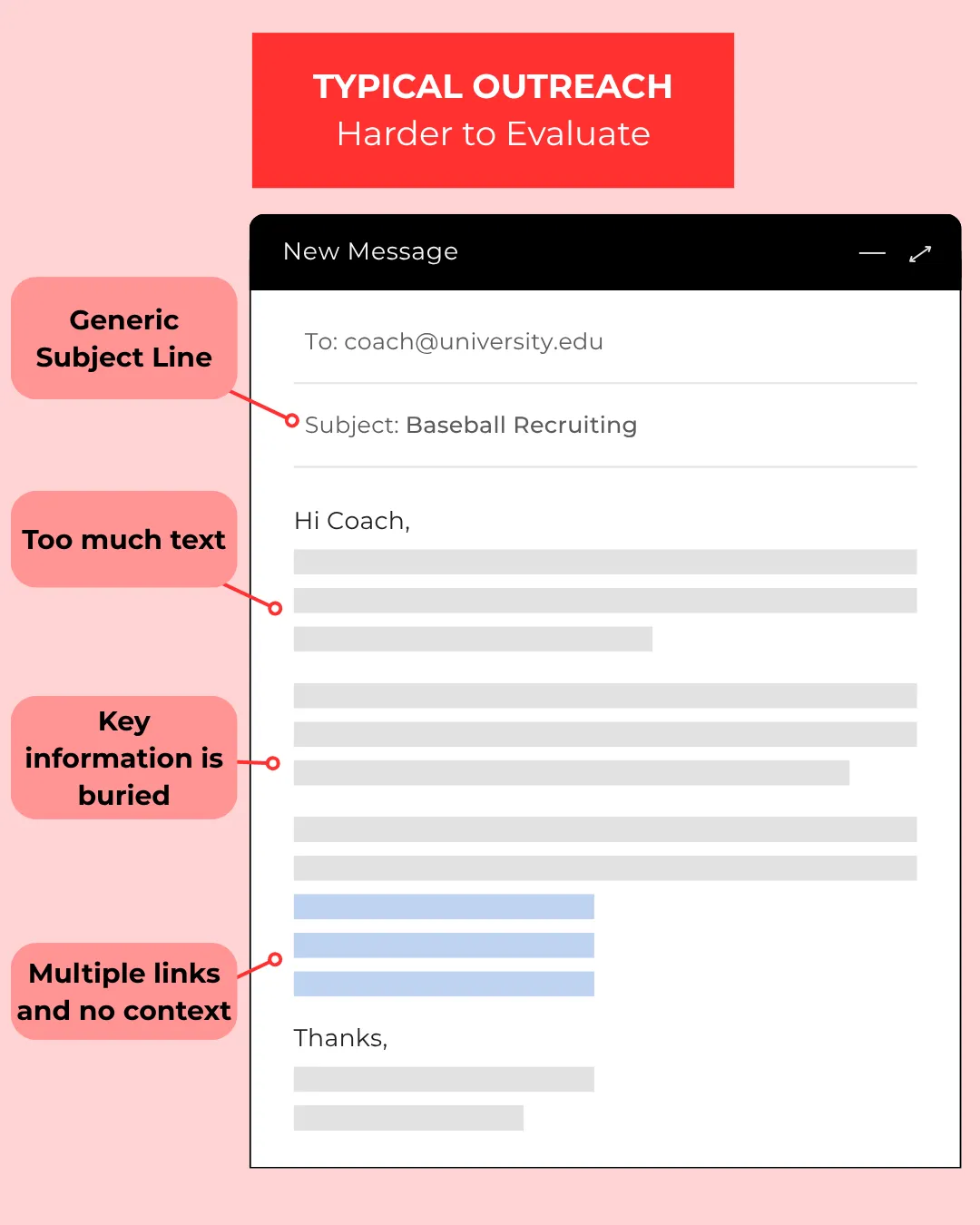
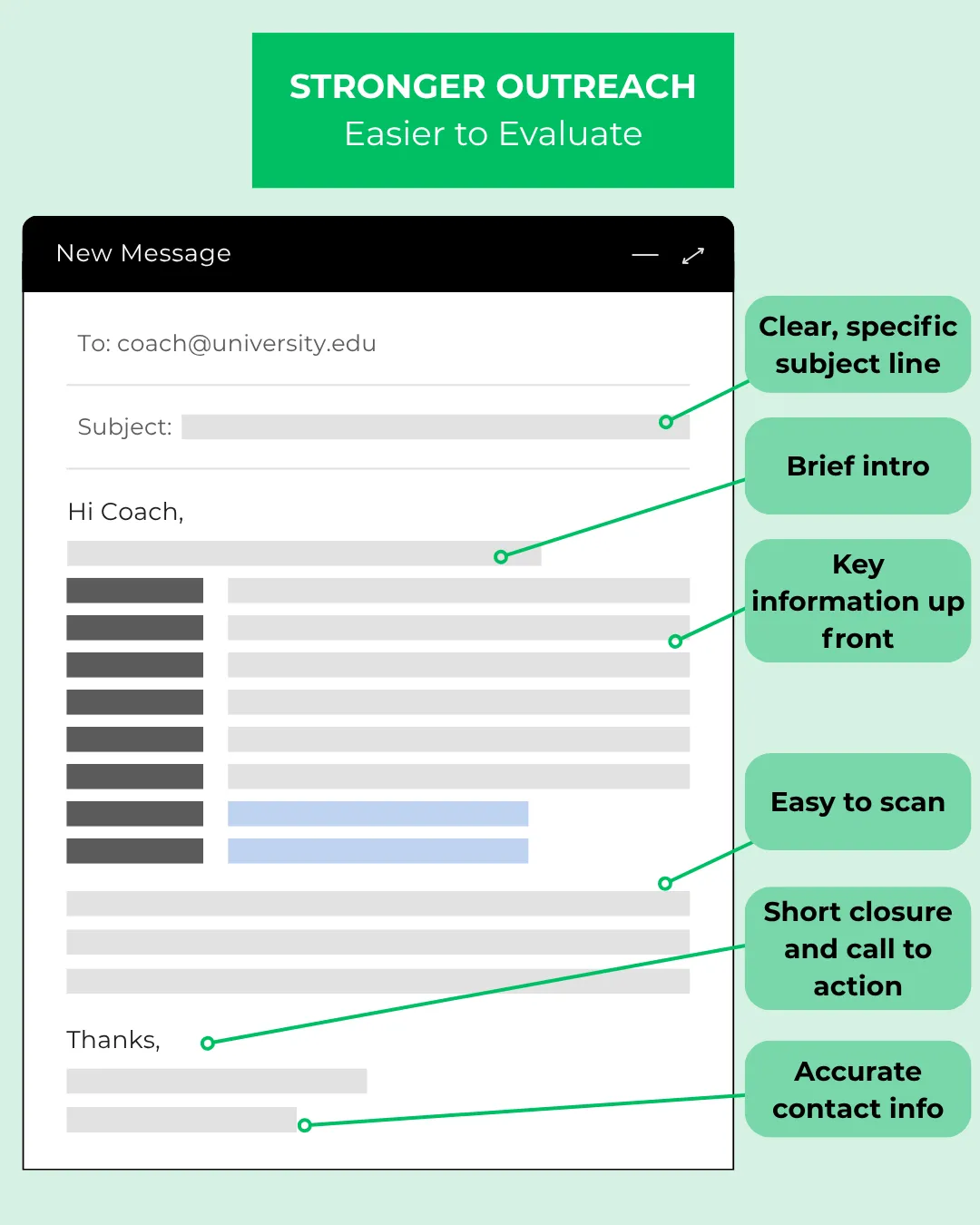
The difference isn’t sending more emails.
It’s making every email quick and easy for a coach to evaluate.
Three steps to make it easier for coaches to evaluate you.

WATCH: Considerations of a College Coach
It’s more than metrics. Learn what college coaches consider when evaluating a potential recruit.

WRITE: Stronger Emails to Coaches
Learn how to write clear, concise outreach that helps a coach quickly understand who you are and why you may be a fit.

CREATE: Your Player Prospect Flyer
Use our template to organize your key recruiting information into one easy-to-share page for coaches.
Here’s What You Get
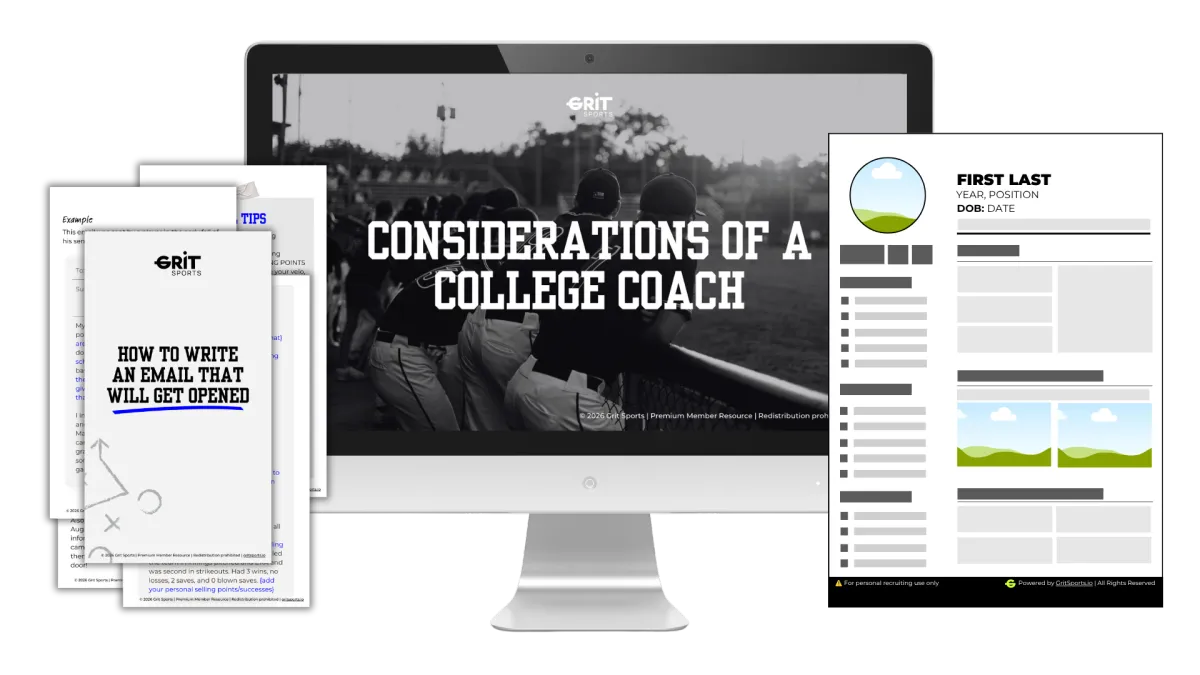
Considerations of a
College Coach
A quick video that breaks down key factors college coaches consider when evaluating potential recruits.
Stronger Emails to
Coaches Guide
A practical guide to help you build clear, concise outreach and know what information to include.
Player Prospect Flyer Template
An easy-to-use template that helps you organize your key recruiting information into one shareable page.
Instant digital access. Start when you’re ready. Use it at your own pace.
Your video, guide, and editable template are available immediately after purchase.
Get on a Coach's Radar Playbook
Video + Guide + Editable Prospect Flyer Template
$27 • Instant Access
What Families Are Saying
Athletes and parents are using Grit Sports to navigate recruiting with more clarity and confidence.
"The clear roadmap and supportive resources have given us a sense of direction I feel confident in."
Rebecca
Athlete Parent
“Grit Sports gave me simple tools and the confidence I needed to make smart decisions going into my 16u summer season.”
Caden | RHP
“This is really awesome. Something like this would have been super helpful. I wish I had Grit Sports in high school.”
Former NCAA Division I Baseball Player
PARENTS
Give Them the Tools.
Let Them Own the Conversation.
When it comes to recruiting outreach, your athlete should be leading the conversation. But knowing what to say, what information to share, and how to put it all together isn’t always obvious.
The Coach’s Radar Playbook gives your athlete a clear framework and practical tools to take ownership of their outreach, while giving you a better way to support them without taking over.

Built From Real Recruiting Experience
When my son started the college baseball recruiting process, I quickly realized how fragmented and confusing it was. There was plenty of information out there, but figuring out what mattered, what was factual, which opinions to keep or toss, what to do next, and how to help him take ownership of the process was another story.
So I set out to make the process easier for others. I started building the tools and resources I wished I'd had from the beginning. Some of those early tools were shaped by the real recruiting experiences happening within our own Grit Sports team. The foundation for the Player Prospect Flyer came from a team member navigating recruiting with her sons, and I later used it with my own son during his recruiting journey.
That same approach still shapes what we build at Grit Sports today. We’re bringing those tools, along with many more, to athletes and families who want practical guidance, clear direction, and a better way to navigate recruiting without all the noise.
Michele Konetski
Founder & CEO, Grit Sports
STILL NOT SURE?
Frequently Asked Questions
What if I’ve already emailed coaches and haven’t heard back?
That’s exactly when this Playbook can help. It gives you a chance to step back and look at how you’re presenting yourself, what information you’re sharing, and whether you’re making it easy for a coach to quickly evaluate you.
It won’t guarantee a response from a coach, but it will help you build stronger, clearer outreach before you send the next email.
What if I don’t have elite stats or metrics, or my grades aren’t the best?
Stats, metrics, and academics can all matter in recruiting, but they aren’t the only pieces of the picture. The Playbook helps you understand the different information coaches may consider and how to clearly present who you are as a player, student, and potential fit for a program.
Is this only for athletes trying to play Division I?
No. The principles in the Playbook can help athletes who are exploring opportunities across different levels of college baseball. The goal is to help you present yourself clearly and professionally when reaching out to programs that may be a fit for you.
What grade should I be in to use the Playbook?
The Playbook is most useful when you’re preparing to begin coach outreach or are already actively communicating with college programs. Even if you’re not ready to contact coaches yet, learning what information you’ll eventually need can help you prepare earlier and more intentionally.
If you’re planning to reach out to NCAA coaches, be sure to check the current NCAA recruiting rules and timelines that apply to your division before you begin.
Can parents go through the Playbook with their athlete?
Absolutely. Parents can help their athlete stay organized, ask questions, and work through the resources. But when it comes to communicating with college coaches, we encourage the athlete to take the lead.
Does this cover the entire recruiting process?
No, and it’s not designed to. The Coach’s Radar Playbook focuses on one important piece of the recruiting process: helping you present yourself more effectively when reaching out to college coaches.
Recruiting has a lot of moving pieces. Grit Sports provides tools and resources designed to help athletes and families understand the broader recruiting roadmap and navigate each step with greater clarity.
What exactly do I get, and how do I access it?
You’ll get immediate digital access to the Coach’s Radar Playbook, including the video, email guide, and editable Player Prospect Flyer Template. Everything is available online so you can work through it at your own pace.